
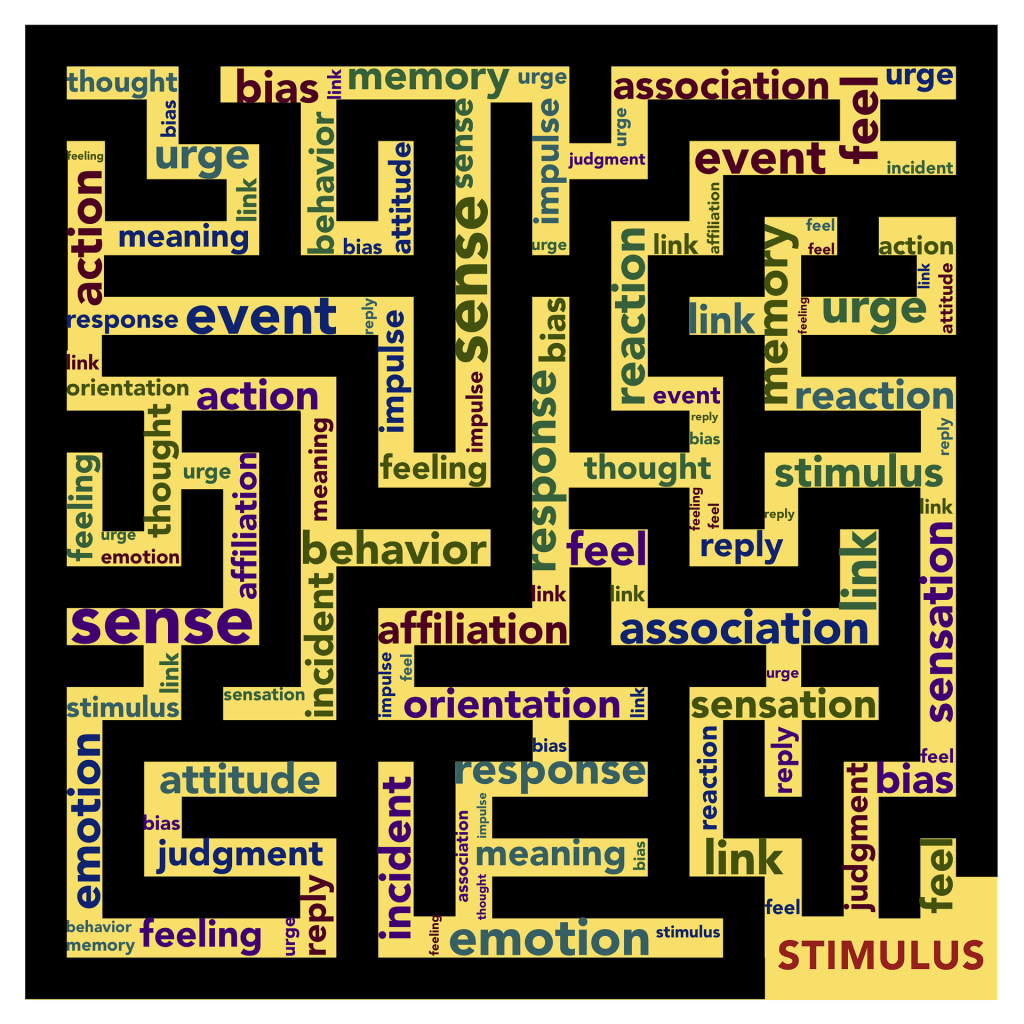
Would you like to know why do you react the way you do even before a situation would present itself before us? Behavioral Biases and our reactions
Its said that your Mind has two spokes which directs its course of decision making: LOGIC and EMOTION. Which Spoke is stronger directs the other one in its direction. Emotionally responsive individuals are more prone to having biases that chart their decision making based on underlying biases.
The reason why one bias would be more prominent than another completely depends on the circumstances & surroundings you were faced with right until the day you encountered a specific problem.
For most emotionally reactive people , what is important is to identify which bias do you strongly identify with and work out a plan for yourself to overcome this.
Listed below are a set of common biases that one comes across :
1. EMPATHY GAP & PROCRASTINATION or FEAR — This cannot happen to me Bias
This number 1 Bias that all of us have , we over estimate our reaction capabilities under extreme high stress situations at work or home. “This cannot happen to me” or “This is not how I would react” are common thoughts that pops in our head when we hear of such cases. This is Empathy Gap Bias.
A natural after effect of this especially in work related situations would be to put off things for later — Procrastinate your reactions due to underlying fear of change or consequences itself. You owe it to yourself to change something about you that you are unhappy about. Here are some simple steps
- Identify you have a problem
- Accept it
- Move forward doing something incrementally different.
2. EXPERTS — Over Confidence Bias
Do you always float towards what the most confident person says in a room? Then this is your Achilles heel. Confidence is always reassuring & may even convince you to take decisions that are counter productive.
To beat this it is important to hone your internal compass and listen to your gut more than any other confident person in the room.
3. LOST IN TRANSLATION —Information Overload Bias: What to Do
How many “How to” blogs, articles, Facebook posts websites, books are you looking at for immediate quick fixes to make you the best possible person according to the website you could be? In case of such information overload I always think , now which one do I follow?
What is your WHY for looking for this issue is a key place to start from. Then make your own process . Follow it and in case you are not getting the desired result you want , tweak something and go back to the process.
4. CHECK YOUR ASSUMPTIONS — Confirmatory Bias
The Confirmatory bias is another important bias where we always only look for evidences to prove our way of thinking or decision is right. When you have a strong opinion about anything , it is important to verify facts. In this fast age where it may not seem relevant , look for people with thoughts that disprove your assumptions. If debating or listening out to the opposite point of view still doesn’t deter you. By all means go for it!
5. YOUR WAY OR THE HIGH WAY — Conservatism Bias
Hanging on to your point of views despite changing realities is bad for you and makes you have a strong Conservatism Bias. Changing realities is the new constant, your view points should be based on realities. Now how do you combat this bias ? When you have invested too much time into a project, a career, a company, a marriage even, you may think that you have put in so much time & effort into this , you lie to yourself it will get better.
A possible solution is to imagine that you are at the beginning , now ask yourself the same question , would you want to stick on? If the answer is yes , by all means go ahead but if not then its time to hang those boots.
6. FAULT IN THE STARS — Self Attribution Bias & Hindsight Bias
Self Attribution Bias is when all your successes in any sphere are accounted to your making whereas all or most of your loses are due to an external agent — person or situation . Having this bias makes you prone to the Conservatism Bias as well. Now decision making is often split second , but having a place to ponder over them would be a good start to work away from the self attribution bias. A critical note on yourself — Writing a journal where you vent your frustrations or ponder over your actions could refine your thought process and ultimately action.
You are your best critique!
7. FICTION OR FACTS — Story telling Bias
We all love a good story. Multitudes of industries have been erected on the world of make believe. Do you bend towards people with good story — happy or sad. Maybe you should re-examine your “why” behind going for a particular product or service. Is it a factual choice or is there an underlying story — (Ad or a writeup), incident or event which prompted you to opt for something .
8. TEAM CAN NEVER GO WRONG — Group Bias
Conforming with the actions of a group and taking an action that is approved by many within a group is what is called a group bias. Having the courage to going against the wind is what pioneers do. Having the courage, perseverance and grit to stick to your decision when it is not the most favored option is what legends are made of. You could too!
- Being completely critical of your abilities & capabilities
- Knowing your limits and horizons
- Researching well on the facts behind your idea and the converse of it is tantamount to the decision making process.
- If you still believe yours is the best , go for it.
9. WHEN TO BACK OFF — Endowment Bias
Endowment Bias refers to placing a high regard or value (emotionally or financially) on to something that you own or you are a part off. Letting go is never an option in such cases. As an individual it is important to know your list of non negotiables. When these are crossed over and over again , your spirit & your individuality is getting eroded piece by piece.
There will come a time you would have to take a step back and ask yourself if this is what you truly want from life. You are worth the effort and the step to be taken sometimes though difficult is worth it!
Knowing yourself better would only enrich your life. Knowing your biases helps you know what glasses you are wearing while making your decisions. Do better by knowing better!
 Penny to Pound Wise